
flexible printed circuit manufacturers
Flexible printed circuit (FPC) manufacturers typically produce circuits with varying numbers of layers, ranging from single-layer to multi-layer configurations, depending on the complexity and functionality required for a particular application. The number of layers in an FPC refers to the number of conductive and insulating layers sandwiched together to form the circuit structure. Each layer contributes to the overall functionality, flexibility, and performance of the FPC, with multi-layer circuits offering increased design flexibility and functionality compared to single-layer counterparts.
Single-layer FPCs consist of a single conductive layer bonded to a flexible substrate, such as polyimide or polyester. These simple circuits are commonly used in applications where space is limited, and only basic electrical connections are required. Single-layer FPCs are cost-effective and easy to manufacture, making them suitable for low-complexity applications such as membrane switches, LED lighting, and simple interconnects.
However, as electronic devices become more complex and compact, the demand for multi-layer flexible printed circuit manufacturers has grown significantly. Multi-layer FPCs feature two or more conductive layers separated by insulating layers, known as core layers and prepreg layers, respectively. These additional layers allow for the integration of more components, traces, and signal layers into a single circuit, enabling higher circuit density, improved signal integrity, and enhanced functionality.
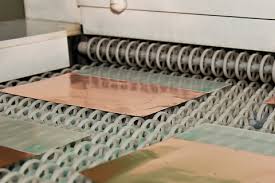
How many layers does an flexible printed circuit manufacturers typically have?
The number of layers in a multi-layer FPC can vary depending on the specific requirements of the application and the complexity of the circuit design. Common configurations include two-layer (double-sided), four-layer, six-layer, and even eight-layer FPCs, with each additional layer providing greater design flexibility and functionality. Multi-layer FPCs are used in a wide range of applications, including smartphones, tablets, automotive electronics, medical devices, and aerospace systems, where space is limited, and performance is critical.
Two-layer (double-sided) FPCs are one of the most common configurations and feature conductive traces on both sides of the flexible substrate. This allows for more complex routing and interconnection schemes compared to single-layer FPCs, making them suitable for applications requiring moderate complexity and functionality. Four-layer FPCs, on the other hand, offer increased design flexibility and signal integrity by adding two additional conductive layers, allowing for more efficient power distribution and signal routing.
Six-layer and eight-layer FPCs are typically used in high-performance applications where stringent electrical requirements, signal integrity, and reliability are paramount. These multi-layer configurations provide greater design flexibility, impedance control, and EMI shielding capabilities, making them suitable for demanding applications such as high-speed data transmission, RF communication, and digital signal processing.
In addition to the number of layers, FPC manufacturers must consider other factors such as material properties, thickness, copper weight, and surface finish when designing and fabricating multi-layer circuits. Each layer must be carefully aligned, laminated, and bonded together to ensure proper electrical continuity and mechanical integrity. Advanced manufacturing techniques such as laser drilling, sequential lamination, and controlled impedance matching are employed to achieve precise layer registration and interconnection in multi-layer FPCs.
In conclusion, flexible printed circuit manufacturers typically produce circuits with varying numbers of layers, ranging from single-layer to multi-layer configurations, depending on the complexity and functionality required for a particular application. Single-layer FPCs are suitable for basic electrical connections, while multi-layer FPCs offer increased design flexibility, functionality, and performance, making them ideal for high-performance applications in diverse industries.